Only organizations that have previously been supported by the Orange Foundation are eligible to participate in this challenge.
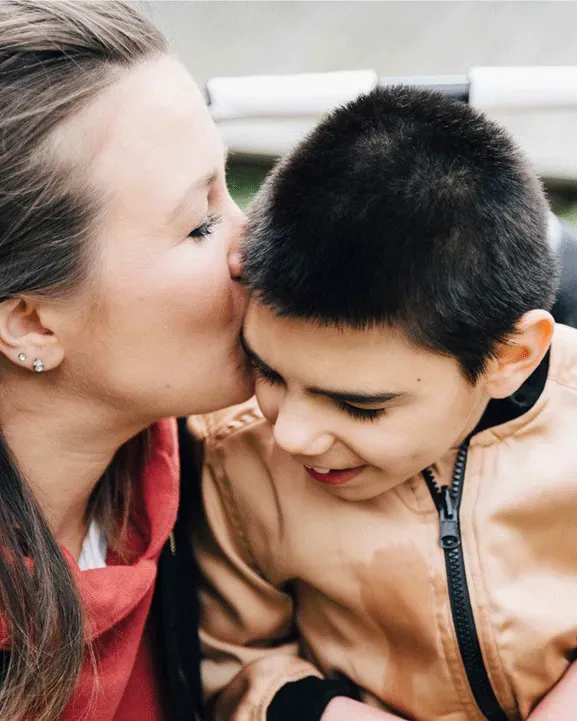
Since 2014, the Orange Foundation has been committed to supporting young job seekers, helping them rebuild their confidence, reveal their talents, and develop their skills through a collaborative, learning-by-doing approach. By supporting meaningful collective projects that address social and environmental issues, we enable these young people to become agents of change and take control of their future.
In addition to supporting your projects in 24 countries, we have been organizing an international digital fabrication challenge around the Sustainable Development Goals (SDGs) for young job seekers supported by your associations since 2016.
A collaboration with RFFLabs and their project named "Emergency Commons "
Following a highly successful first edition, which yielded 14 prototypes now available as open-source resources, we are continuing our contribution to the "Emergency Commons" project.Led by RFFLabs and supported by the Fondation de France, the project is carried out in partnership with the Michelin Corporate Foundation, the Crédit Coopératif Foundation, and the Banque des Territoires, among others. This project is a continuation of the citizen initiatives that emerged during the pandemic. The agility, creativity and responsiveness demonstrated by makers and fablabs are valuable resources that enable us to better anticipate future crises.
Our ambition is twofold: first, to consolidate the position of fablabs and makerspaces as citizen-led hubs of resilience; and second, to provide local communities with practical tools to help them organize and act collectively in emergencies.
The project, whose deliverables will be made available to all as open, shared resources, is structured around three main pillars (you can learn more on the RFFLabs website):
● Memory: to document the community resources created during emergencies, enhance the value of civic expertise, and preserve this knowledge
● Preparation: strengthening the resilience of makerspaces, developing preparedness, and equipping the premises
● Planning ahead: to train, raise awareness, and galvanize collective action
What does the ImagineMakers challenge consist in?
Our challenge will contribute to the “Preparation” pillar by documenting several open-source prototypes. These must be distinct from those already prototyped within the "Emergency Commons" toolkit, you can find the existing list on the RFFLabs platform.
his year, a new theme has been added: "Adapting Living Spaces and Emergency Accommodation."
In short, here is what is expected:
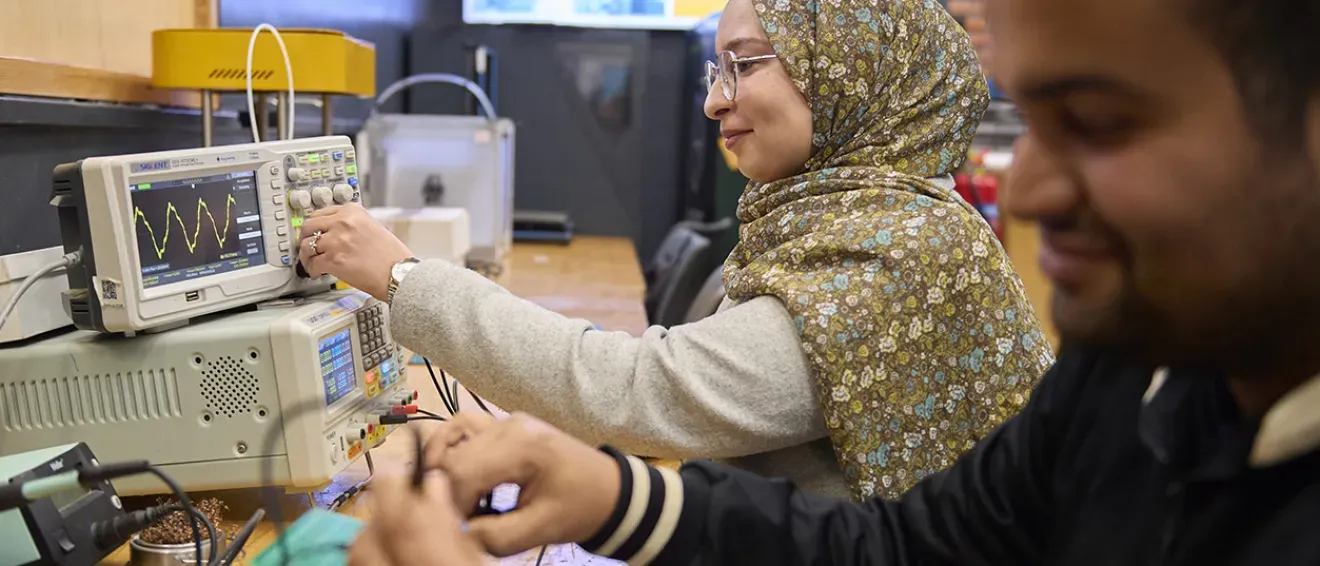
- Phase 1: Submit your prototype project via the platform by January 31, 2027. Working alongside young people in integration, you will develop an initial prototype and begin identifying potential partners and collaborators.
- Phase 2: Once selected (in early February), you will work with the young participants to finalize the prototype and complete its documentation by mid-April. A template will be provided, and you will receive support from coaches.
- Phase 3: The young participants will present their prototype to a jury. The winning teams will be invited to attend OctoberMake from October 6 to 9, 2027 (3–4 teams, with 3 people per team).
We invite you to propose, with a team of young people in social integration, a prototype related to one of the following themes:
Projects must respect a number of common principles:
- Reproductible : facilement reproductible dans ce contexte de crise ou dans un autre, permettant une production distribuée avec les outils du fablab, et aux usagers de l’utiliser et/ou de le produire par eux-mêmes après la crise
- Economical: It requires minimal resources (time (e.g., for a rapid response in the event of a crisis), raw materials, means, etc.).
- Collective, inclusive, and civic: A team of young job seekers and 1-2 residents ("citizen manufacturers") are involved to encourage civic involvement, mutual aid, cooperation, and psychological support among those affected.
- Organizational: Organization of the site to meet the need (logistics, human resources, necessary partnerships, etc.).
- Contextual : It responds to a specific need (e.g., a situation that has already been experienced or a known risk).
Resilience : It improves the ability of people affected by a crisis to protect themselves from immediate impacts (security, basic needs, and human dignity) and quickly return to an acceptable daily life despite the adverse situation.
You can submit your projects between November 24, 2026, and January 31, 2027, on the Orange Foundation website or by following this link.
The project submission should include the following: a description of the team and the project, an account of the experience (testimonials from the young people and citizens involved), a presentation of the prototype, photos, and a video.
What's next?
In February 2027, 15 to 20 projects will be selected and awarded €3,000 each to refine and document their prototypes.
These prototypes will be incorporated into the "Emergency Commons" toolkit, a broader collection that will include open-source files and tutorials (for useful objects and devices), practical guides (covering energy, water, and communication), as well as proposals for shareable equipment and facilitation methods. They will also be featured in an exhibition that will travel to various locations.
If you are among the 20 selected projects, you will have just under months to refine your prototype and document it according to a framework we will provide. In April, a jury will select 3–4 of these prototypes to be showcased and highlighted.
Would you like to learn more?
To provide you with further details about this challenge, we are hosting webinars on December 3rd: