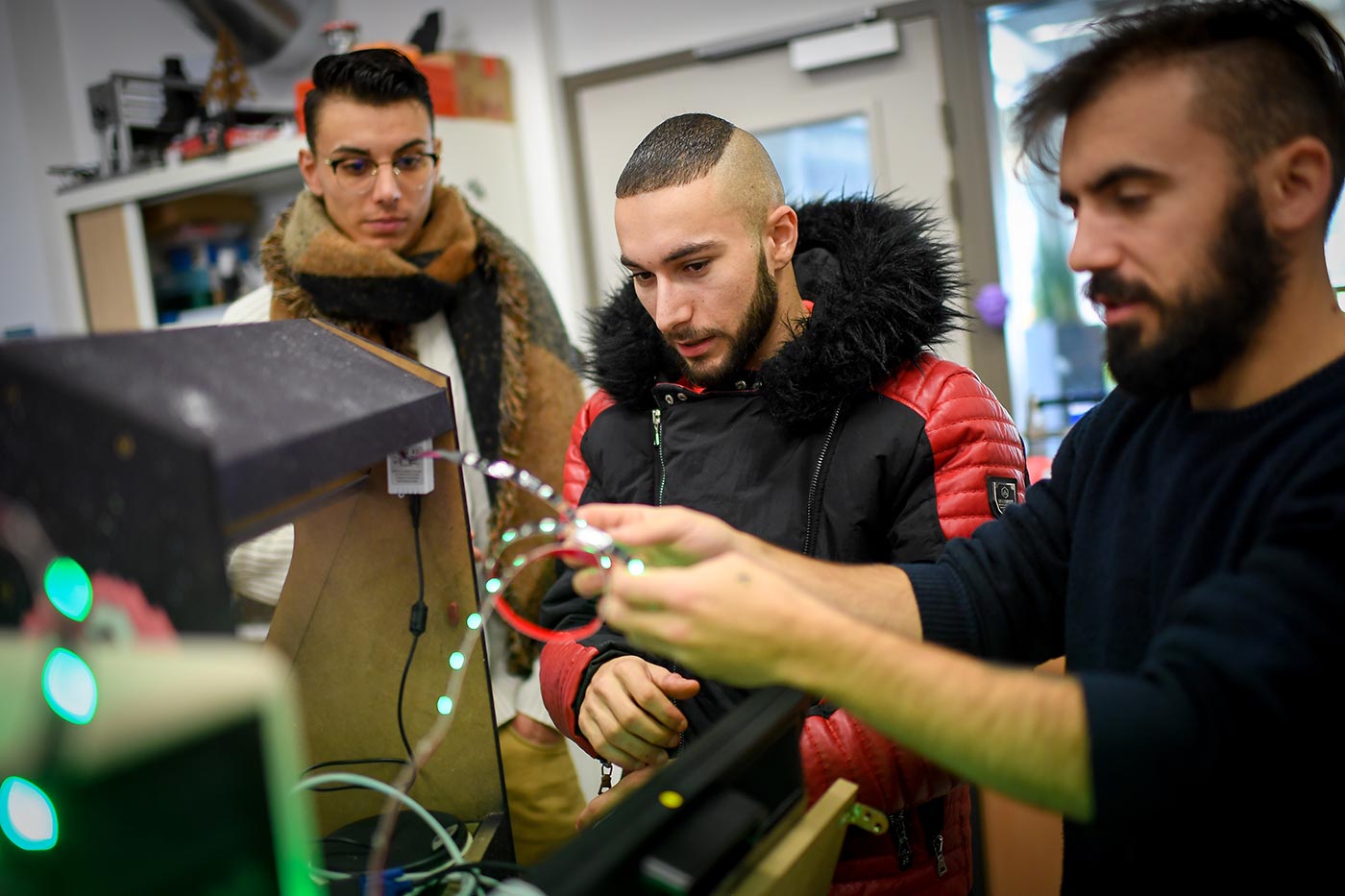
Learning is a powerful tool for empowerment and social cohesion, allowing each individual to realize their potential and contribute to society. We believe these goals can be achieved by creating the right conditions through "learning by doing" together.
Since 2014, the Orange Foundation has been committed to an ambitious approach around digital education to give young people and women new opportunities for social and professional integration. To achieve this, we have developed the concept of Solidarity FabLabs and Third Places, which enable us to support and train young job seekers in the 25 countries where Orange operates.
The Learning Differently call for projects is intended for organizations that work to educate young people in need and help them get back on track. We want to support collaborative projects that incorporate active pedagogy and "learning by doing" to address the needs of the local community. This call for projects offers the opportunity to develop a group project led by young school dropouts and job seekers that addresses a local need and delivers a tangible solution. The project will enable these young participants to develop cross-disciplinary skills, i.e., the four Cs of education: collaboration, creativity, communication, and critical thinking. It will also help them break down barriers, regain self-confidence, rekindle their motivation, showcase their talents, and contribute to society.
Call for projects
We invite organizations to propose a group project that will help young people in need develop cross-disciplinary skills. This youth-led project must lead to a tangible solution to a local problem.
The project will take place in one of the countries where Orange is present (not including France): Belgium, Botswana, Burkina Faso, Cameroon, Central African Republic, Democratic Republic of the Congo, Egypt, Guinea, Guinea-Bissau, India, Ivory Coast, Jordan, Liberia, Madagascar, Mali, Morocco, Moldova, Poland, Romania, Senegal, Sierra Leone, Slovakia, Spain and Tunisia."
For general applicable terms, please refer to the Orange Foundation governance charter.
If your entity is selected, please refer to the terms and conditions which will be applicable: Philanthropy agreement convention outside Europe. We need you to proceed to a review of this document before the selection process.
- Through innovative practices based on active pedagogy and “learning by doing” together, participants complete a group project (lasting a minimum of 35 hours). This fosters self-confidence, motivation, re-engagement, social connections, and skill development. ⇒ several young people are working together on the same project over a minimum period of 35 hours
- The project addresses a local need relevant to the organization itself, another organization, a community, a company, or a Sustainable Development Goal. It fosters interaction with local stakeholders and is meaningful. ⇒ An operational partnership must be established with the entity (organization, community, company, cooperative...) whose needs are being addressed. This entity will validate the specifications, facilitate iterations during the project, and attend the presentation. Preference will be given to projects meeting an external request.
- The project delivers a useful concrete solution that meets the need. ⇒ it is necessary to have a fablab or to have a fablab partner for the realization of a prototype and the manufacture of an object
- The project leverages digital technology (digital machines (FabLab), software, etc.) and raises awareness about responsible use of digital technology. ⇒ need to use digital technology, a key skill regardless of the profession. New: awareness of the use of responsible AI is desired.
- The project is aimed at disadvantaged young people between the ages of 13 and 25. It is carried out in partnership with organizations that directly support these young people. => If you do not directly support the young people, a referral partner is required (e.g., a second chance school, an organization that supports young people in difficulty, an organization for young refugees, a cultural organization, etc.) that will support them during and after the project to promote this experience and the skills they have developed.
- The young people will present the solutions they create in front of the partners, which will enable them to continue to develop their skills and take pride in what they have created.
- The required budget (these actions must be free for participants) should be realistic and not cover general operating costs or the wages of permanent staff. The Orange Foundation's financial support will be used for the following:
- developing the project and coordination with partner organization(s)
- supporting the young people during the project and promoting the initiative
- purchasing materials needed to carry out the project, if necessary
- The ability to successfully carry out the project (team, skills another financial partner, etc.), the planned number of sessions/groups, the number of beneficiaries and the gender distribution
- The project IS NOT: a top-down training, a digital workshop, media activities (video, web, etc.), an intercultural journey, mentoring, or the construction of a place
- Organizations that support disadvantaged youth (Second Chance School, other specialized training organizations, etc.)
Organizations that provide educational solutions (makerspaces (FabLab, Third Place, etc.), community education organizations, etc.) in partnership with organizations that support young people
The organization or NGO must be able to establish a tax receipt for donation in Europe.
Documents to include with the application:
- The organization’s bylaws
- The organization's budget
- The latest audit report
A summary of actions funded by the Orange Foundation for organizations that have already received funding (without this summary, the Foundation will not support a new project)
Useful information for project applications
Frequency of the call for projects: once a year.
Duration of support: the project takes place over one year and can be renewed for a maximum of 3 years (if renewal request: specify project developments, and provisional budget and beneficiaries). To be considered for renewal, you will need to submit a project assessment and application to the selection committee for review.
Schedule:
• Opens on: May 4, 2026
• Closes on: July 3, 2026
• Publication of results: end of December 2026
Duration of support: the project takes place over one year. To be considered for renewal, you will need to submit a project assessment and application to the selection committee for review.
Webinar - June 13 at 3pm (GMT+1)
The Orange Foundation invites you to follow our webinar about the "Learning Differently (International)" call for projects.
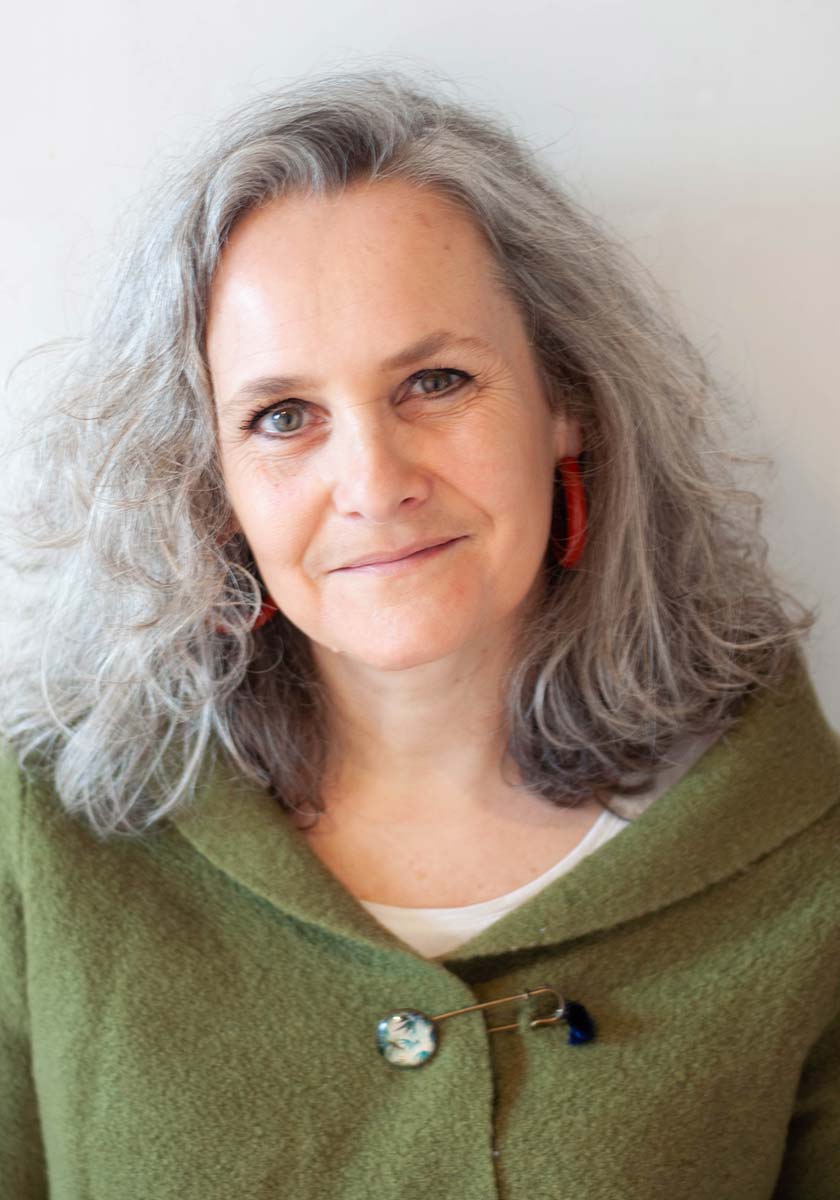
Séverine Ozanne, the Director of Philanthropy for the program, will present the selection criteria and the application submission process. The purpose of this exchange is also to provide an opportunity to address your questions.